
Launching a website is not the finish line. It is the starting point of an ongoing responsibility most businesses underestimate until something goes wrong. A plugin breaks. Traffic quietly drops. A competitor publishes a fresher, faster version of the same page. A security vulnerability goes unpatched for months.
The companies that get lasting value from their web presence treat their website like a product, not a project. That means maintaining it consistently, optimizing it regularly, and managing it with the same attention they give to their sales pipeline or customer service.
This guide explains what professional website maintenance services actually include, how they differ from website management, how much they cost, and how to evaluate providers.
Website maintenance services cover the ongoing technical and content work required to keep a site performing at its best. It is not a one-time job. It is a recurring responsibility that typically includes:
Security monitoring and updates. CMS platforms, plugins, and third-party integrations release updates constantly, and running outdated versions is the leading cause of website vulnerabilities. A maintenance service handles updates proactively and monitors for threats before they become incidents.
Performance optimization. Page speed degrades over time as content accumulates and technology evolves. Regular optimization keeps load times fast, images compressed, and code clean.
Content updates. Outdated service descriptions, broken links, old team bios, stale blog posts: these are all signals to visitors and search engines that a site is not being maintained. A maintenance service keeps the content layer current.
Backups and disaster recovery. Automated daily backups, tested restores, and a recovery plan for downtime or a security breach. Most businesses do not think about this until they need it.
Analytics and reporting. Monthly reporting on traffic, conversions, and user behavior so you have visibility into what is working and what needs attention.
Technical SEO maintenance. Sitemaps, crawl errors, structured data, page speed, mobile performance. These are not set-and-forget configurations. They require regular monitoring and adjustment.
These terms are often used interchangeably, but they describe different scopes of work.
Website maintenance is technical and operational. It keeps the site running correctly: updates, security, backups, performance, bug fixes. Think of it as the infrastructure layer.
Website management is broader and more strategic. It includes maintenance, but adds content strategy, SEO management, conversion optimization, analytics interpretation, and alignment with marketing goals. A website manager does not just keep the lights on. They actively work to improve how the site performs against business objectives.
A small business with a stable, low-complexity site might only need maintenance. A growing B2B company with active marketing programs, a blog, and ongoing lead generation goals typically needs management. The distinction matters when you are scoping a service or evaluating quotes, because the two things have very different price points and deliverables.
A website care plan is a structured maintenance agreement that defines exactly what will be done, how often, and at what cost. It is the recurring-service model used by agencies and freelancers to provide predictable support rather than reactive, ad-hoc fixes.
A well-designed care plan protects your brand in three concrete ways.
First, it prevents the security incidents that damage reputation. Hacked websites, data exposure, and malware injections are not just technical problems. They erode the trust you have built with every person who has visited your site. A care plan with proactive security monitoring catches vulnerabilities before they are exploited.
Second, it keeps your site competitive. Search engine algorithms, browser standards, and user expectations all change continuously. A care plan includes the ongoing technical work that keeps your site current with those changes, rather than letting it fall behind competitors who are actively investing in theirs.
Third, it gives your team bandwidth back. Every hour a marketing manager or founder spends troubleshooting a website problem is an hour not spent on higher-value work. A care plan transfers that operational burden to specialists who handle it faster and more reliably.
Professional website managers take responsibility for the full picture of a site's performance. Here is what that looks like in practice:
Content creation and updates. Writing and publishing SEO-optimized blog posts, updating service pages, refreshing product information, and keeping all copy aligned with current brand messaging.
Security monitoring and patching. Running regular security audits, applying software updates, maintaining SSL certificates, and implementing firewalls and access controls.
Performance optimization. Compressing images, minifying code, managing caching and CDN configurations, and monitoring Core Web Vitals to ensure the site meets current speed standards.
SEO management. Keyword research, on-page optimization, structured data, internal linking, and tracking rankings to identify pages that need attention.
Analytics and reporting. Setting up and interpreting analytics, generating monthly reports on traffic, conversions, and engagement, and translating data into actionable recommendations.
Backup and recovery. Scheduling automated backups, testing restore procedures, and maintaining a documented recovery plan for emergency situations.
A good website manager does not wait for problems to surface. They run proactive audits, flag issues early, and bring recommendations rather than waiting to be asked.
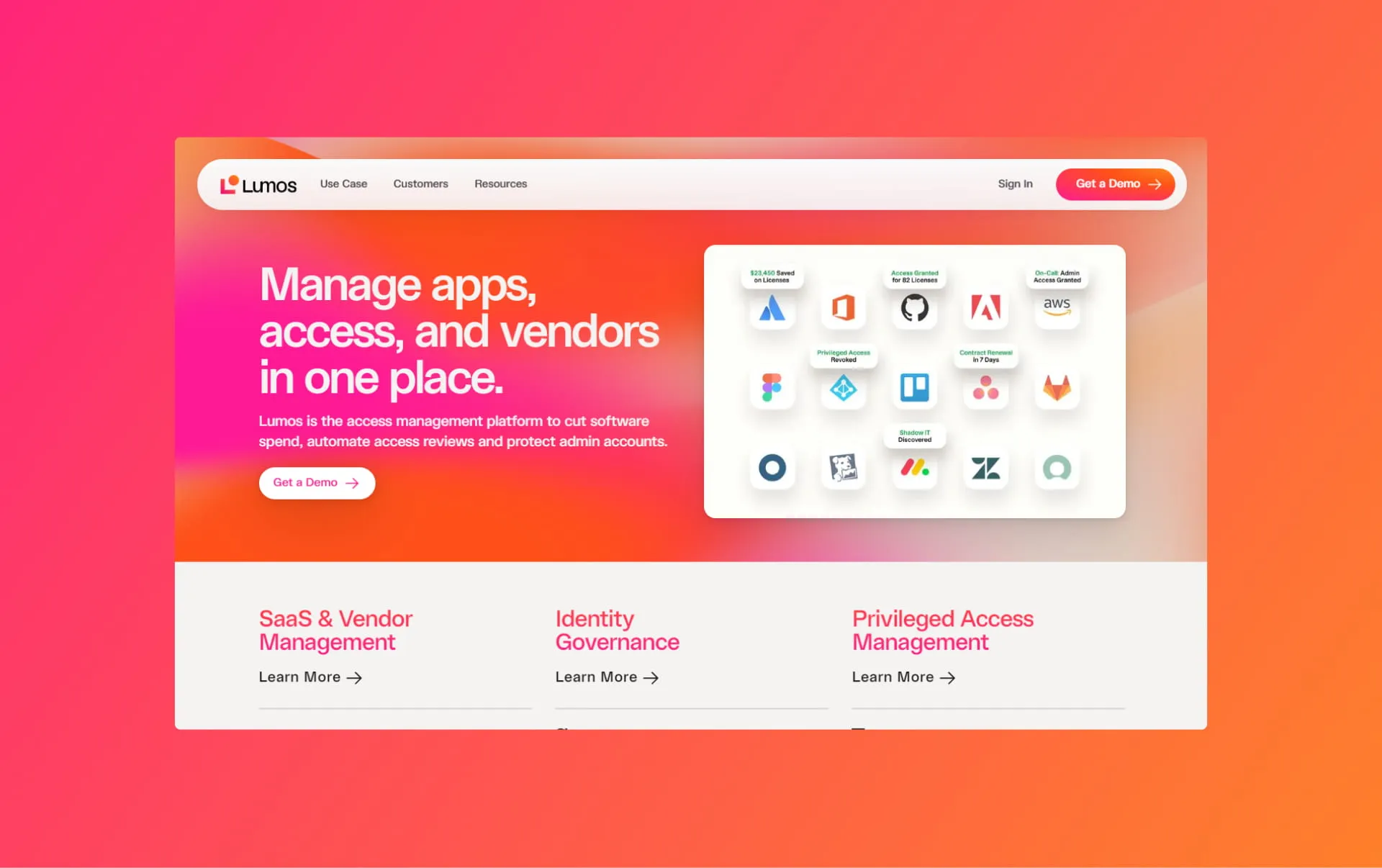
Lumos, a San Francisco-based software startup, engaged Contra Studio for website management from their 2022 launch. Their internal team had built an initial version in Webflow but needed a partner to own the ongoing development and optimization.
We established a collaborative workflow covering design file sharing, feedback loops, bug tracking, and weekly development sprints. Using Webflow's CMS, symbols, and component architecture, we built a system their internal team could update without developer support.
The ongoing partnership has continuously expanded the site's capabilities while keeping performance and brand consistency intact. The result: increased site traffic, improved lead generation, and a digital presence that communicates the Lumos brand accurately to their target audience. View the full case study
Pricing varies widely depending on the scope of services, the complexity of the site, and the type of provider. Here is a realistic breakdown:
Basic maintenance plan (security updates, backups, uptime monitoring): $100 to $300 per month. Suitable for small business sites that do not change frequently and do not require active content work.
Standard care plan (maintenance plus content updates, basic SEO, monthly reporting): $300 to $800 per month. The right fit for most B2B companies with an active marketing presence.
Full website management (strategic management, content production, CRO, advanced SEO): $800 to $2,500 per month. Appropriate for companies where the website is a primary lead generation channel and requires ongoing optimization, not just upkeep.
Hourly or retainer for ad-hoc work: $50 to $150 per hour, depending on the provider type (agency vs. freelancer vs. specialist).
One thing worth understanding: the cheapest option is rarely the lowest total cost. A basic plan that does not include security monitoring, content updates, or performance work creates deferred problems that cost significantly more to fix than to prevent.
Not all providers deliver the same level of service. Here is what to look for when evaluating options.
They have case studies with measurable outcomes. Traffic growth, conversion improvement, reduced downtime. If a provider cannot show you results, they do not have them.
Their scope of work is clearly defined. A good care plan specifies exactly what is included, what is billed as additional work, and what the turnaround times are. Vague agreements lead to scope creep and frustration.
They understand your platform. A Webflow-specialized agency will manage a Webflow site better than a generalist who works with everything. Platform expertise matters for both speed and quality of work.
They communicate proactively. Monthly reports, proactive flagging of issues, and a clear point of contact are baseline expectations. If you only hear from a provider when something breaks, that is not management. That is reactive support.
They think beyond maintenance. The best website management relationships actively contribute to business growth, not just upkeep. Your provider should be bringing recommendations, identifying opportunities, and treating your site as a business asset.
At Contra Studio, we provide ongoing website management for B2B companies who want a partner that is as invested in their site's performance as they are. If you want to understand what that looks like for your specific situation, let's talk.